
Crawlspace Moisture Problems
Crawlspace Moisture Problems Explained
The Charlotte region is classified as HUMID SUBTROPICAL (mild temperate, fully humid with hot summers). We average less rainy days but more annual rainfall than Seattle Washington which is known for rain they receive. For homes that are built on a crawl space the outside air in all seasons is detrimental to your homes’ structural integrity and health.
In the spring and summer humid/hot air enters the crawlspace through foundation vents as well as other foundation penetrations and evaporation directly from the soil. Most homes have HVAC systems and ductwork installed within the crawlspace. They also have garages, decks, and landscaping that prevent cross-airflow. When this air is unable to readily filter out it begins to filter up in what is referred to as the stack effect. In doing so the humid air settles in the insulation and wood framing. Often time the ductwork will be covered in condensation. It will also find penetration within the sub-floor of the home and continue its path through the home. This can bring allergens, mold particles, and musty odors into the home. In addition to health concerns, this can cause your HVAC system to work harder as it is working against the elements.
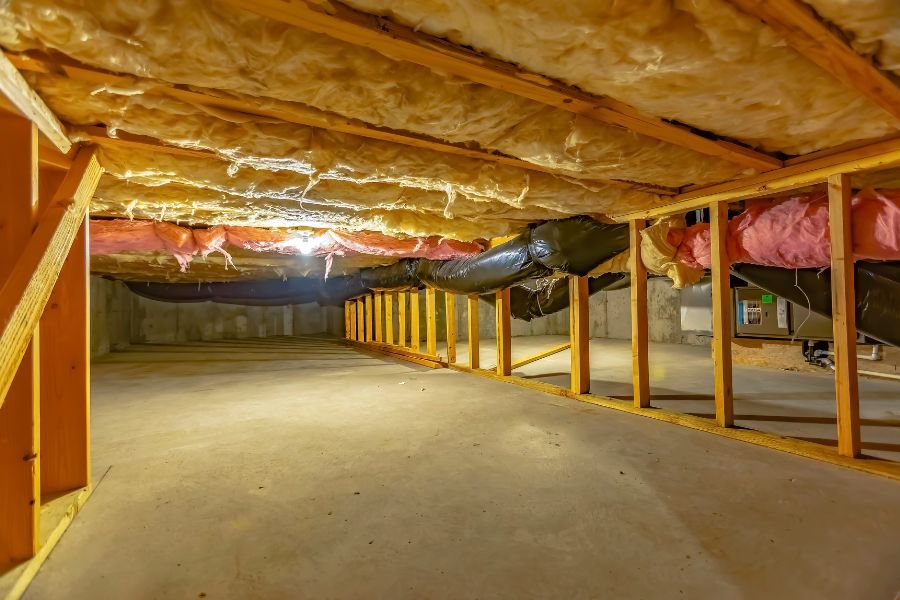
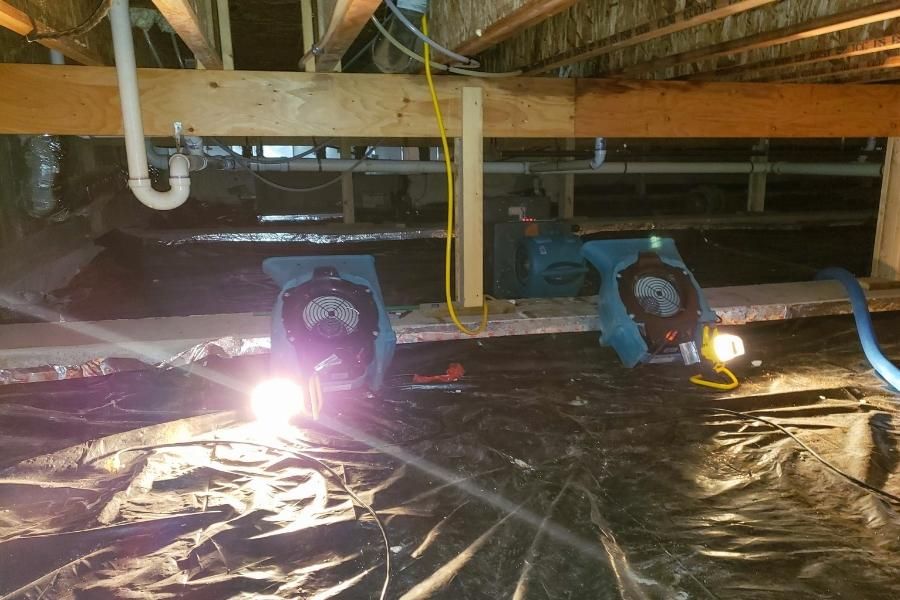
In the fall and winter, the cool air enters the crawlspace, and due to the fact cold air is heavier than hot air it just sits in the crawlspace again settling into the insulation and wood framing.
Over time this moisture will result in the growth of mold. Not only can this be a health hazard but also can be a structural issue if the mold becomes Poria Incrassata (Brown wood rot). This mold is prevalent in temperate, humid regions where poor ventilation exists. If there is enough moisture nearby the mycelium can travel nearly 30’ destroying the sub-structure of a home.
How do we fix it?
If mold/fungal growth is present all insulation should be removed, and the crawlspace treated with an antifungal. Upon completion, new insulation should be replaced.
- First, we need to install, at a minimum high quality vapor barrier. This will reduce the amount of evaporative moisture from the ground which can be as much as 12 gallons per day per 1000sf.
- We then need to seal off all air gaps including foundation vents and the crawl space door. This is generally done with a variety of foam boards, expanding foam or other sealants.
- In some situations, you may opt to run the vapor barrier up the walls to provide an even better air seal. This is referred to as an encapsulation.
- A commercial-grade dehumidifier should be installed, and drainage routed out of the crawlspace.
- This system needs to be inspected and maintained at the very least 2x per year.
Call Us Now and Schedule Your Inspection!
Our Full Range Of Services
Contact Us
Reach out to our team today
Contact Us
We will get back to you as soon as possible.
Please try again later.
